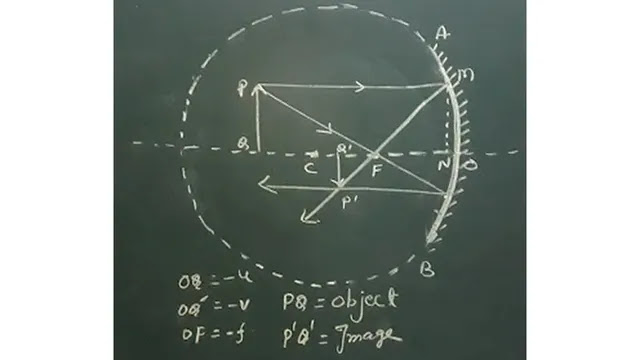
In this blog post, we will derive the mirror formula class 12 physics for a concave mirror. You will also get the definition of a spherical mirror, diagram, MCQs, and numerical questions.
 physics0365@gmail.com
Reflection of Light Class 12: Laws, Mirror Formula, Ray Diagrams & Numericals
In this post, you will learn about Reflection of Light in Class 12 Physics, including laws, mirror formulas, ray diagrams, and real-life applications important for CBSE, RBSE, NEET, and JEE exams.
Coulomb’s Law Class 12 Physics: Formula, Derivation, Examples & Applications
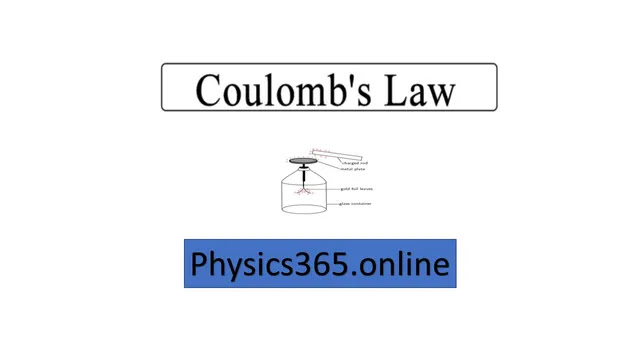
Coulomb’s Law is one of the most fundamental concepts in Class 12 Physics under Electrostatics. It explains how electric charges interact with each other and helps us understand the force between charged objects. A clear understanding of Coulomb’s Law is essential for RBSE board exams as well as competitive exams like JEE and NEET. In this article, you will learn the definition of Coulomb’s Law, its formulas, real-life examples, and important concepts in a simple and easy-to-understand way.
Electric Field and Electric Field Lines Class 12 | Types, MCQs & FAQs Explained
In the Class 12 Physics Board Exam, Electric Field and Electric Field Lines are key scoring topics. It explains how charges interact without contact through an electric field, used in both theory and numericals.
The electric field is defined as `E = F/q_0`, and for a point charge, ` E = {KQ}/r^2`. Electric field lines represent the direction and strength of the field, helping in understanding point charges, dipoles, and uniform fields.
This chapter includes definitions, formulas, properties, and exam-oriented questions, making it essential for board exam preparation and strong conceptual clarity.
Electric Field due to Infinite Conducting Sheet of Charge Derivation
The derivation of the electric field due to a conducting sheet is one of the most important topics in class 12 physics, under electrostatics. Here we will also learn about concepts, formulas, applications, and exams-focused insights.
Electrostatics of Conductors Class 12 | Properties, Derivation & Examples
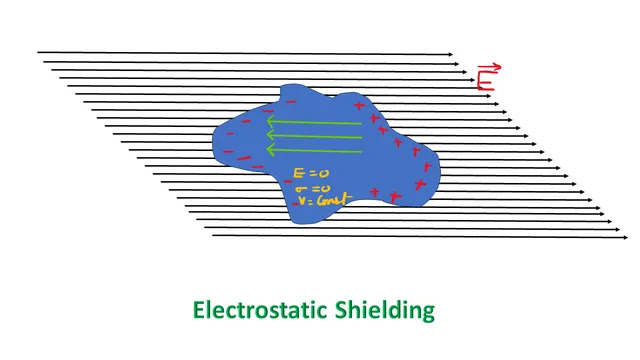
Introduction In this post, you will learn about the electrostatics of conductors, key properties, electric field behaviour, electrostatic shielding, and important real-life applications for Class 12 Physics. What is a Conductor? A conductor is a material that contains free charge carriers (electrons in metals), which can move freely inside the material. … Read more
Electric Field due to Uniformly Charged Infinite Plane non-conducting Sheet
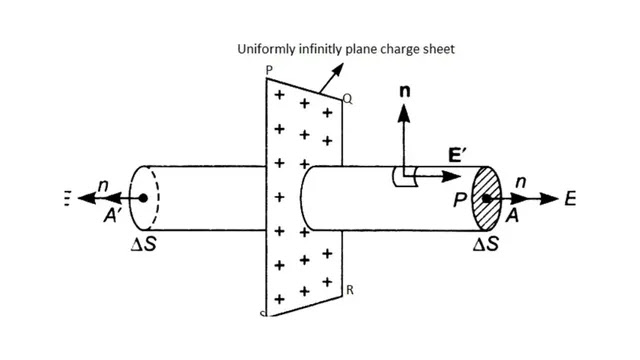
Introduction to Gauss’s Law In this post, you will learn about Gauss’s Law, its derivation, electric flux, and key applications in electrostatics for Class 12 Physics. This topic is highly important for board exams, JEE, and NEET, as it simplifies electric field calculations using symmetry and the Gaussian surface. Here, we will calculate the … Read more
Electric Field Due to Linear Charge Distribution Class 12 | Gauss Law Derivation, Formula & Notes
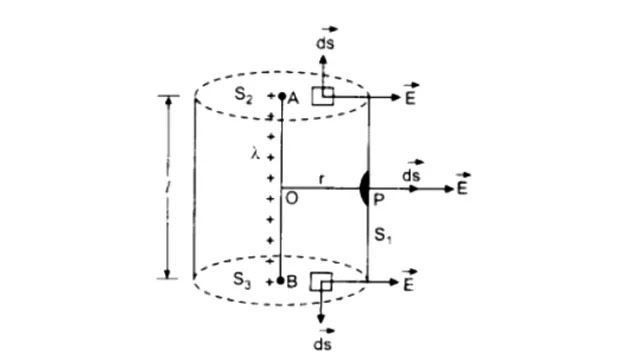
Physics365.in brings you a complete guide to the electric field due to a line charge for Class 12, including a step-by-step derivation of Gauss’s law, the linear charge density formula, and detailed electrostatics notes.
Gauss’s Law Class 12: Complete Notes, Derivation & Important Questions
Introduction Learn about Gauss’s Law Class 12 Physics with derivation, electric flux formula, important concepts, applications, and MCQs for board exams. Gauss’s Law Class 12 Physics Statement The total electric flux passing through a closed surface kept in an electric field in vacuum or air is equal to the product of … Read more
Sycon (Scypha): Structure & Canal System | Class 11 Biology
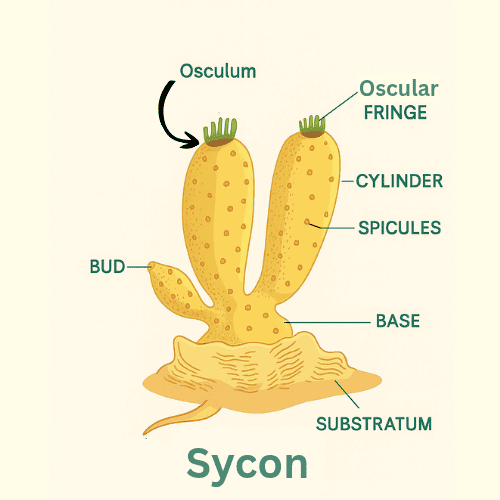
Sycon (Scypha): Structure, Canal System, Diagram & MCQs for NEET/B.Sc. What is Sycon (Scypha)?Sycon is a marine sponge belonging to the phylum Porifera with a syconoid canal system. It is an important topic for NEET and B.Sc. exams. Meta Description Learn Sycon (Scypha) in zoology with classification, structure, canal system, labeled diagram, and MCQs. Perfect … Read more